

SYTRONIX GREEN POWER SYSTEM by REXROTH. A case study of virtuous collaboration
Importance of the overall energy conversion efficiency of electric propulsion
The electric drive mechanism is one of the vital components of a motor-pump system comprising an electric drive circuit, an energy storage system and a transmission unit. In particular, when such a system requires high energy density for rapid dynamic response, its design should be capable of meeting a range of requirements, such as optimal acceleration, high torque, efficient and adjustable speed, and, last but not least, energy efficiency.
In terms of the overall energy conversion efficiency of electric propulsion, currently available systems vary according to various parameters: motor power losses, harmonic distortions, torque pulsations, etc.
There are numerous research projects continuing to improve the energy efficiency of hydraulic systems and beyond, with various solutions already available on the market.
With technological advances, there are numerous approaches that can improve the energy efficiency of hydraulic systems, such as hybrid electro-hydraulic energy recovery methods, load-sensing mechanisms, multi-actuator hybrid hydraulic systems with controlled displacement (DC), independent metering valves, multi-stage bionic power supply, pump-controlled actuators, and hydraulic transformers incorporating a hydraulic vane motor and an oscillating plate pump.
Injection moulding machine scheme
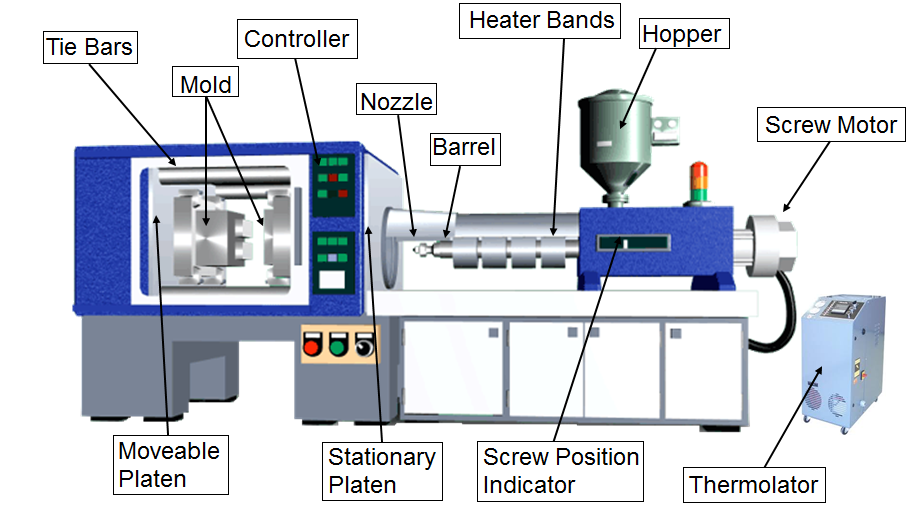
In this spirit of innovation, the partnership between Tecno Fluid Service SRL and Bosch Rexroth continues to yield excellent results. The Rexroth Sytronix Green Power is the result of this collaboration, and the case study discussed here summarises it. Indeed, in collaboration with a major company operating in the automotive sector (which we will refer to here as Company A), it has been possible to accelerate the development of an innovative technology capable of achieving significant energy savings in motor-pump hydraulic systems on plastic moulding ‘injection moulding’ machines.
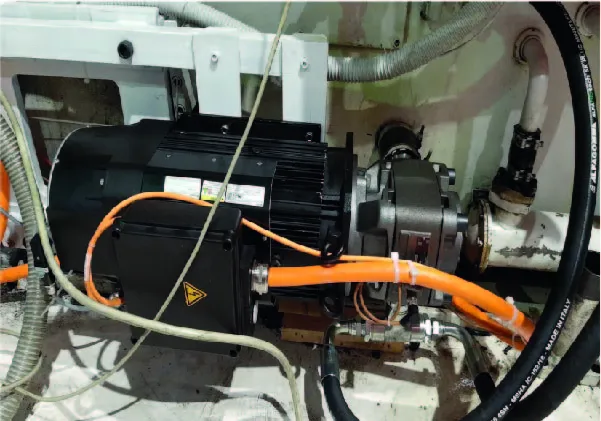
The partnership for the Sytronix Rexroth Green Power between Rexroth, TFS and Company A has made it possible to combine and pool expertise from three key fields: control engineering, fluid mechanics and materials technology.
Expertise in control systems was required to characterise the dynamics of each component, to control the dynamic performance, position, pressure and other parameters of a specific component or circuit, where electronics plays a decisive role in this field.
Fluid mechanics provided the tools to understand the behaviour of fluids, the forces exerted by static and dynamic fluids on components, and phenomena such as water hammer and cavitation.
The selection of materials with appropriate elasticity, hardness, friction properties, etc. was a decisive factor in the design of power components.
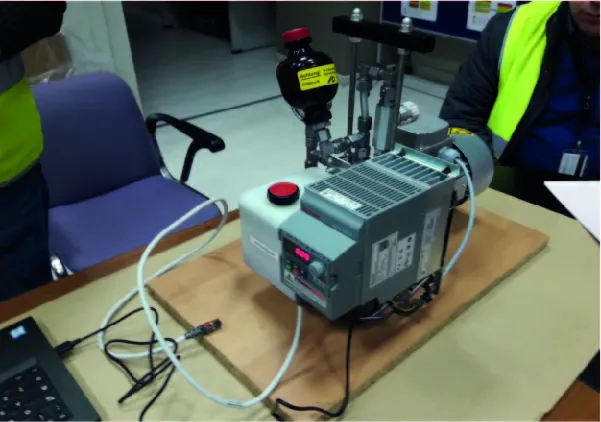
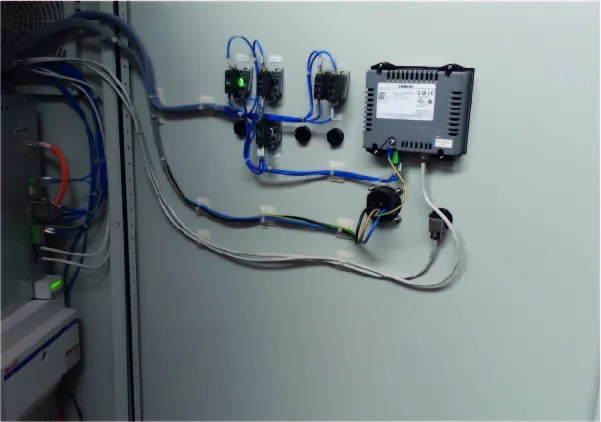
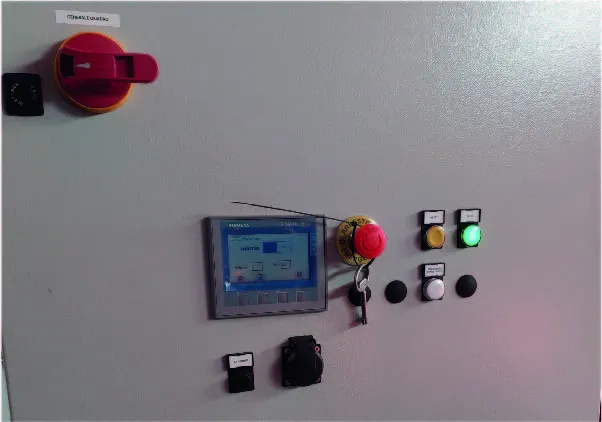
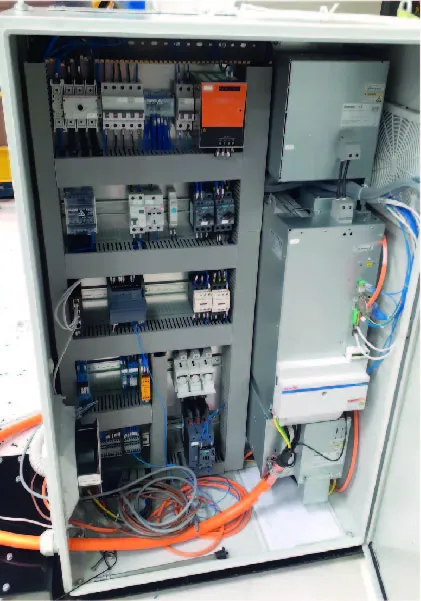
The lower utilisation or "quiet" state of Sytronix during pressure/flow cycle operations allows lower FEM consumption, generating higher savings.
The results of this collaboration have made it possible to overcome the limitations of a standard circuit based on the use of an inverter, including:
- it does not allow for the replacement of the motor/pump unit
- the pump used has a fixed flow rate
- it does not provide for any feedback as no feedback sensors are fitted
- the machine’s hydraulic circuit is not streamlined because pressure and flow rate variations will continue to be managed by circuit components (limiting and proportional valves)
- no monitoring or control of periods of low usage or ‘idle’ states during cycle operations, as the system operates at constant power to allow pressure/flow variations to be managed by logic valves
Conversely, the Rexroth Sytronix Green Power is based on the implementation of several innovative solutions, including:
- replacement of the motor-pump unit with a brushless motor and a variable-flow pump
- the pump switches from fixed flow rate and displacement to a pump with fixed displacement and variable flow rate
- the software, together with the drive and the system’s sensors, ensures constant feedback and the modulation of motor speed and pump flow rate to interact in real-time according to the hydraulic power required, as generated by the press’s cycle diagram
- the machine’s hydraulic system adopts a more streamlined configuration, as pressure and flow rate variations are managed by the Sytronix system rather than by pressure relief valves
- The ‘idle’ or ‘standby’ state during press cycle operations where lower pressure and flow rates are required results in reduced hydraulic fluid consumption, leading to greater savings.
I risultati ottenuti con Sytronix
The results of the trial conducted by the Sytronix Rexroth Green Power partnership on an injection moulding machine fitted with a conventional 55 kW asynchronous motor can be summarised as follows: energy consumption per working hour with a 61-second cycle fell from 19.84 kWh to 6.06 kWh, representing an energy saving of 69.56% (download the report here).
Further benefits achieved with the Sytronix Rexroth Green Power system are listed below:
- performance improvements: the system has switched from open-loop to closed-loop operation
- reduced oil overheating: running the pump only when movement is required has resulted in less oil heating and consequently energy savings in relation to the water cooling unit
- smooth movement: although the Sytronix spends a fraction of a second at 0 rpm before reaching the required speed, this has smoothed movements without compromising cycle time, resulting in considerable savings on maintenance cycles
- lower operating noise from the hydraulic pump.